Building Narrative Strategy For A Medical Scholarship Campaign
PROJECT OVERVIEW
Client: The Medical Society of Eastern Pennsylvania
Project: Develop & design a week-long Instagram campaign for the organization’s flagship medical student scholarship
Goal: Increase application submissions
Services: Narrative Strategy, Social Campaign Architecture
Timeline: 1 month
CASE STUDY
·
CASE STUDY
·
CASE STUDY · CASE STUDY ·
ORGANIZATIONAL CONTEXT
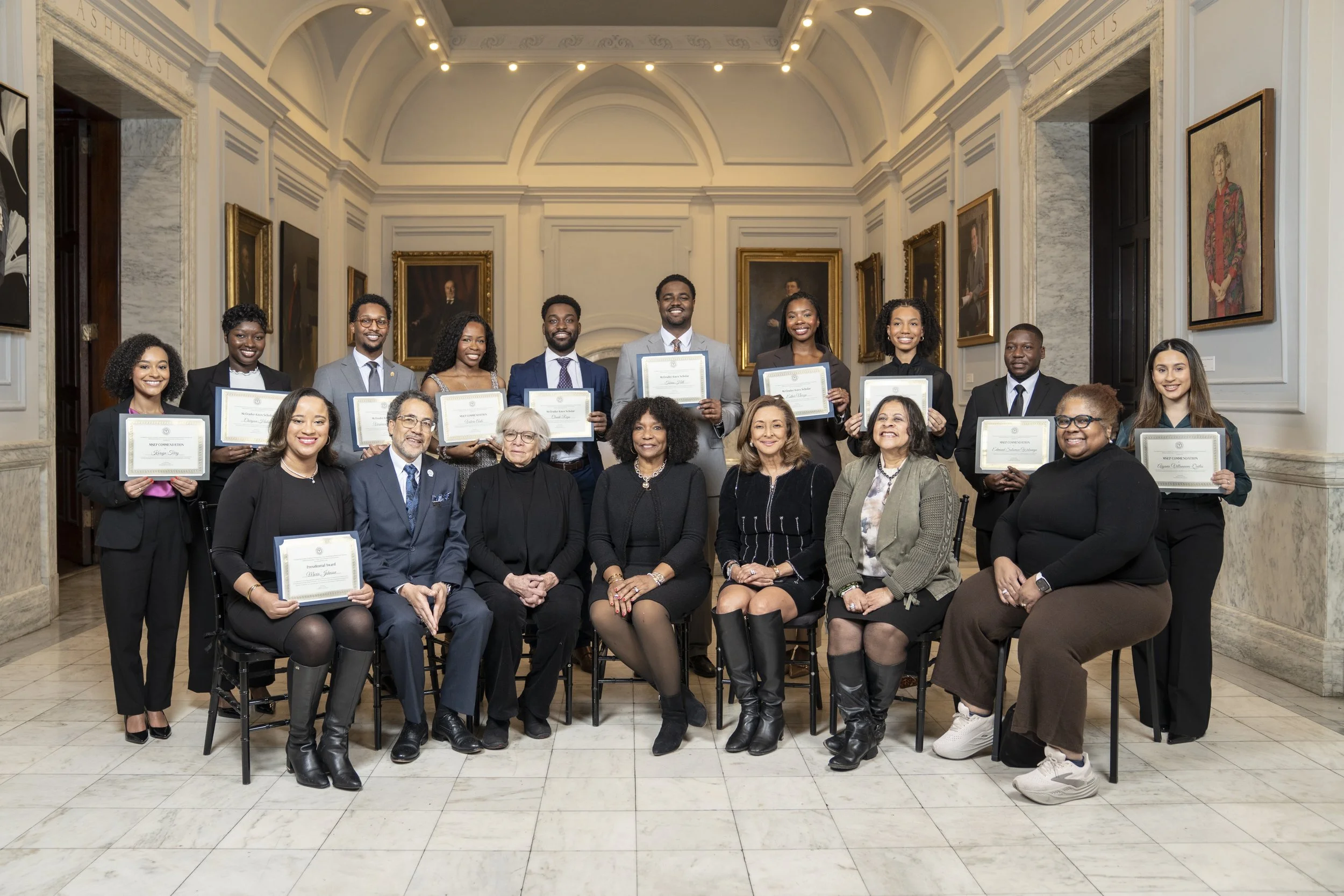
The Medical Society of Eastern Pennsylvania (MSEP), the local affiliate of the National Medical Association, is the oldest and largest association of Black physicians in the country. Since at least 2021, MSEP has run the the McGruder-Knox Scholarship, which supports aspiring 2nd and 3rd-year Black medical students.
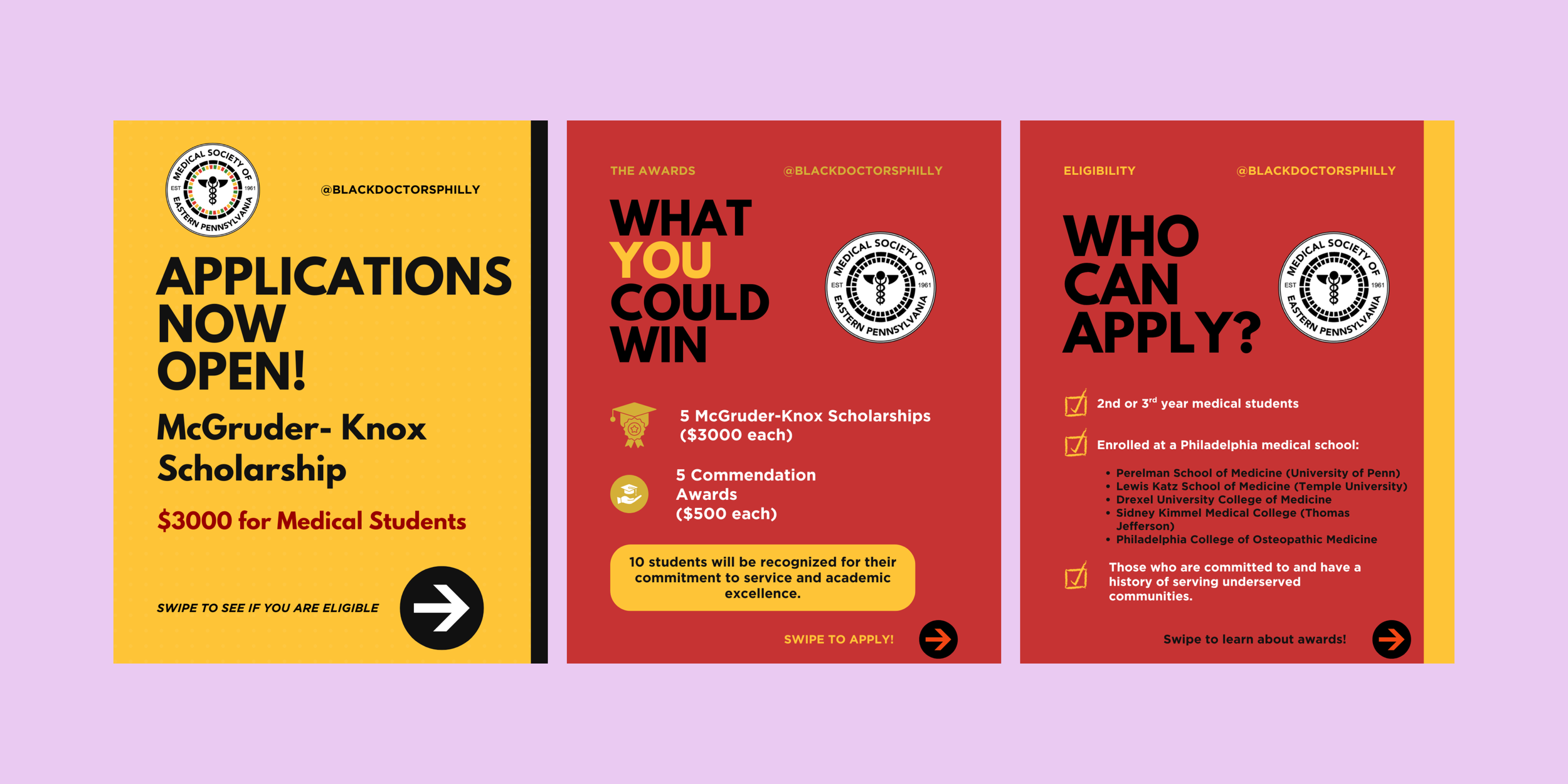
Historically, the scholarship was promoted through email communications with deans at five Philadelphia-area medical schools. With an Instagram account of 1200+ followers, MSEP also promoted the scholarship on the organizational Instagram, generating an average of approximately 25 applications per cycle.
I was responsible for leading the communications strategy for the 2026 scholarship campaign.
THE CHALLENGE
Although the scholarship was well-regarded within the medical student community in Philadelphia, prior campaigns centered primarily on logistics:
Eligibility criteria
Application deadlines
Promotion of the scholarship also relied heavily on individual diversity deans sharing the opportunity within their respective institutions. That means outreach was largely decentralized and relationship-dependent. As a result, the scholarship lacked a scalable, organization-controlled recruitment strategy.
In addition, scholarship promotional messaging lacked narrative depth and emotional identification. As a result:
Applications plateaued year over year
Engagement remained moderate
The scholarship was positioned as transactional rather than transformational
For mission-driven organizations and nonprofits, this is a common challenge: strong programs, under-leveraged storytelling.
NARRATIVE STRATEGY
Instead of promoting the scholarship as just funding assistance, I reframed it as a transformational milestone that gives medical students access to mentorship, community, belonging, and opens up the next stage of their physician journey.
The strategy focused on identity-based storytelling.
Key components included:
Conducting video interviews with previous McGruder-Knox scholars in the MSEP network
Identifying recurring narrative themes in the interviews (resilience, mentorship, representation in medicine, professional development, belonging)
Developing a sequenced, one-week storytelling campaign on Instagram
Pairing emotional narrative content with strategic calls-to-action
EXECUTION
The campaign ran over the course of a single week, structured as a deliberate narrative arc designed to move prospective applicants from awareness to action.
DAY 1
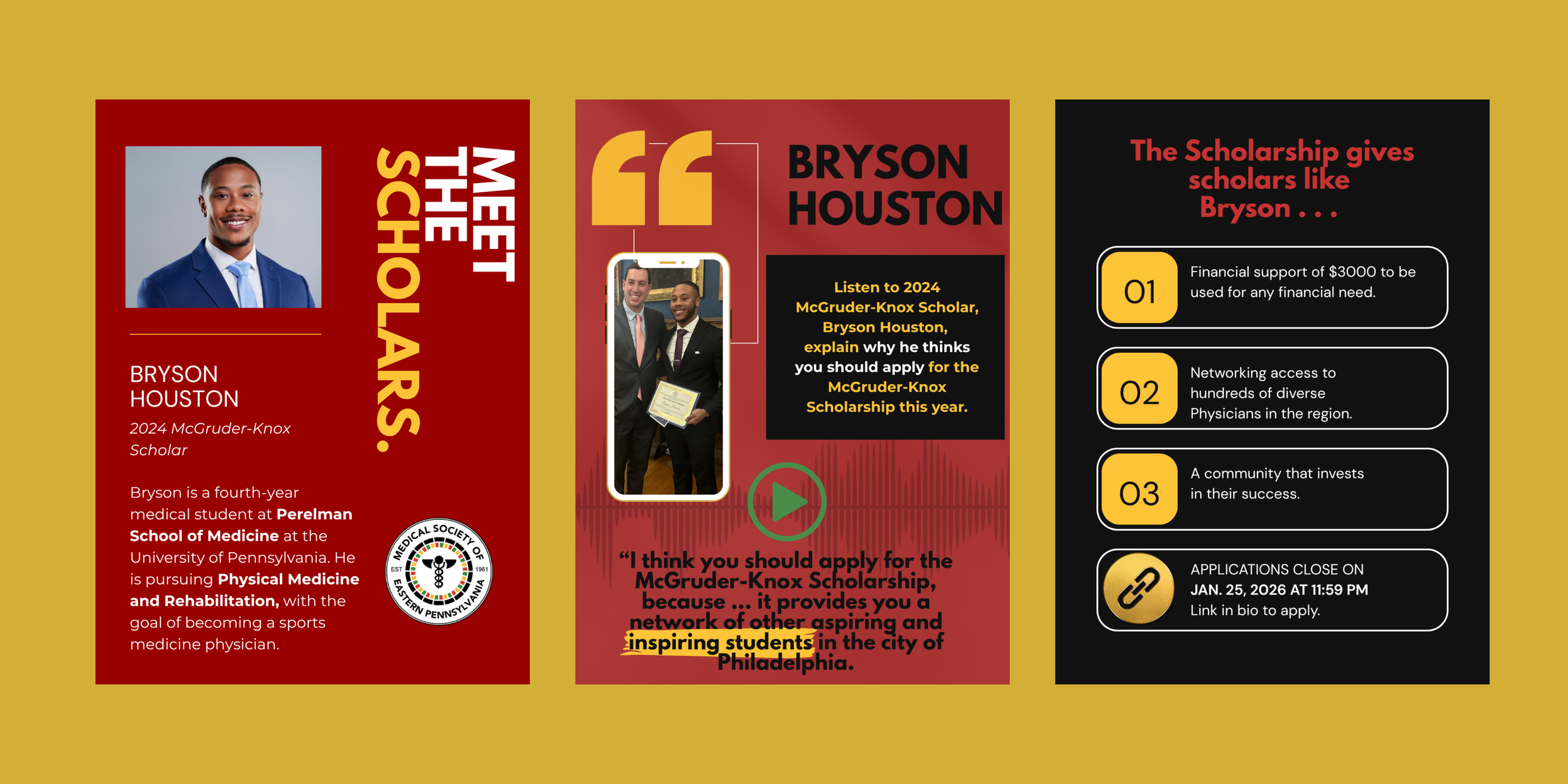
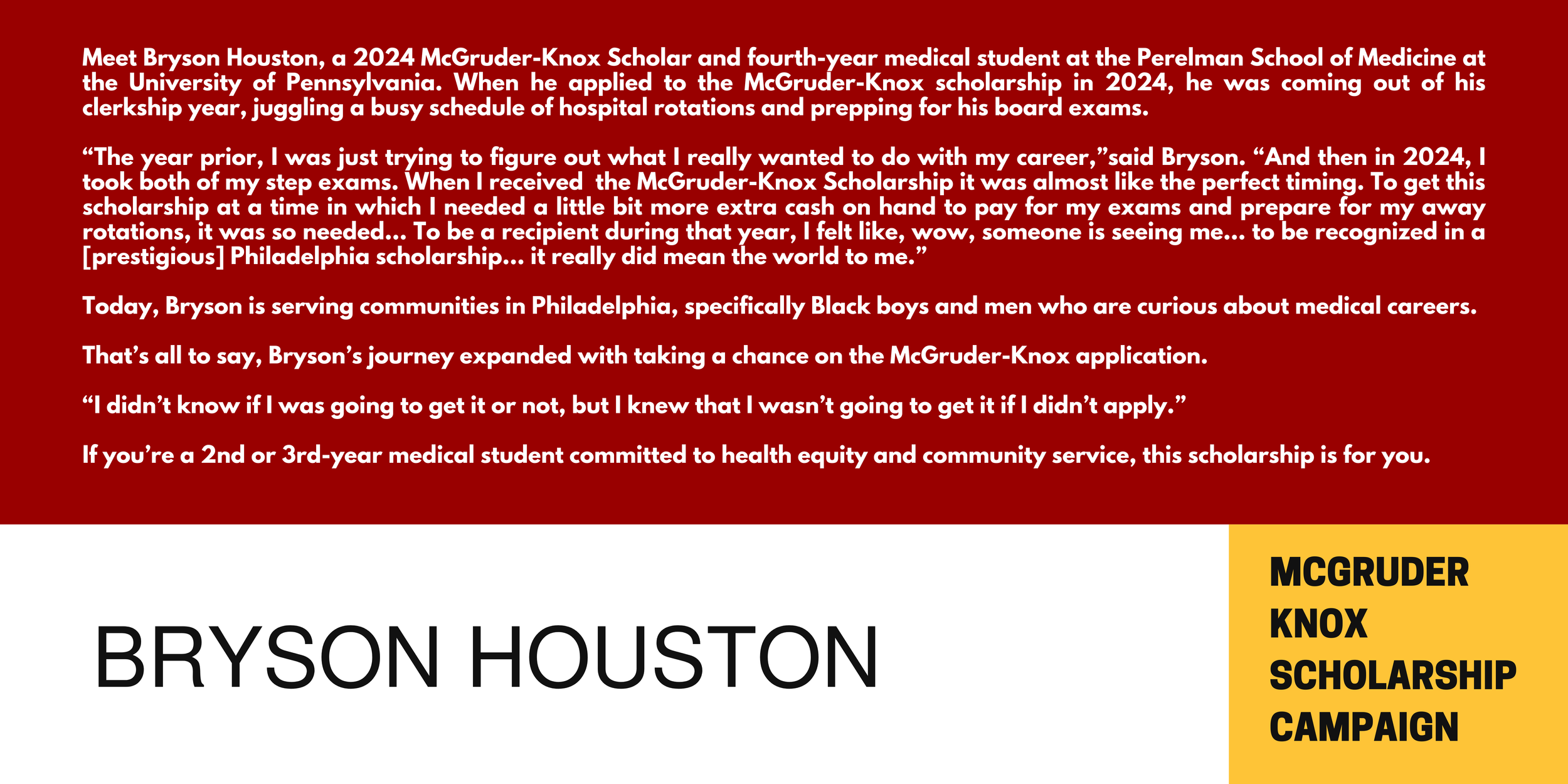
The campaign opened with a three-slide Instagram carousel (see above) featuring Bryson Houston, a 2024 McGruder-Knox Scholar and fourth-year medical student at the Perelman School of Medicine.
Rather than beginning with application details, the post caption led with Bryson reflecting on the intensity of his clerkship year, financial pressure surrounding board exams, and the emotional impact of mentorship and community support. Crucially, application logistics appeared only after emotional identification was established.
That post became not only the highest-performing post of the campaign, but the most successful piece of content in the organization's Instagram history, generating over 300 likes and 24,000 views, representing a 1,721% increase over MSEP's typical views performance.
Below is an excerpt of the caption for Bryson’s post.
DAY 2
Day two introduced the next scholar spotlight – an Instagram reel walking through one scholar’s experience of receiving the scholarship, the feeling of validation that followed, and a brief breakdown of how she made use of the scholarship funds. This is where the messaging shifted from identification to aspiration. I reframed the scholarship from “just money” to this scholarship helps you achieve belonging and professional advancement.
The caption was written in long-form, third-person style, prioritizing personal narrative and direct quotes. This post also highlighted the challenge the student faced before becoming a scholar, and the specific intervention the scholarship made possible in their medical journey.
REEL & CAPTION - DAY 2 CAMPAIGN POST
DAY 3
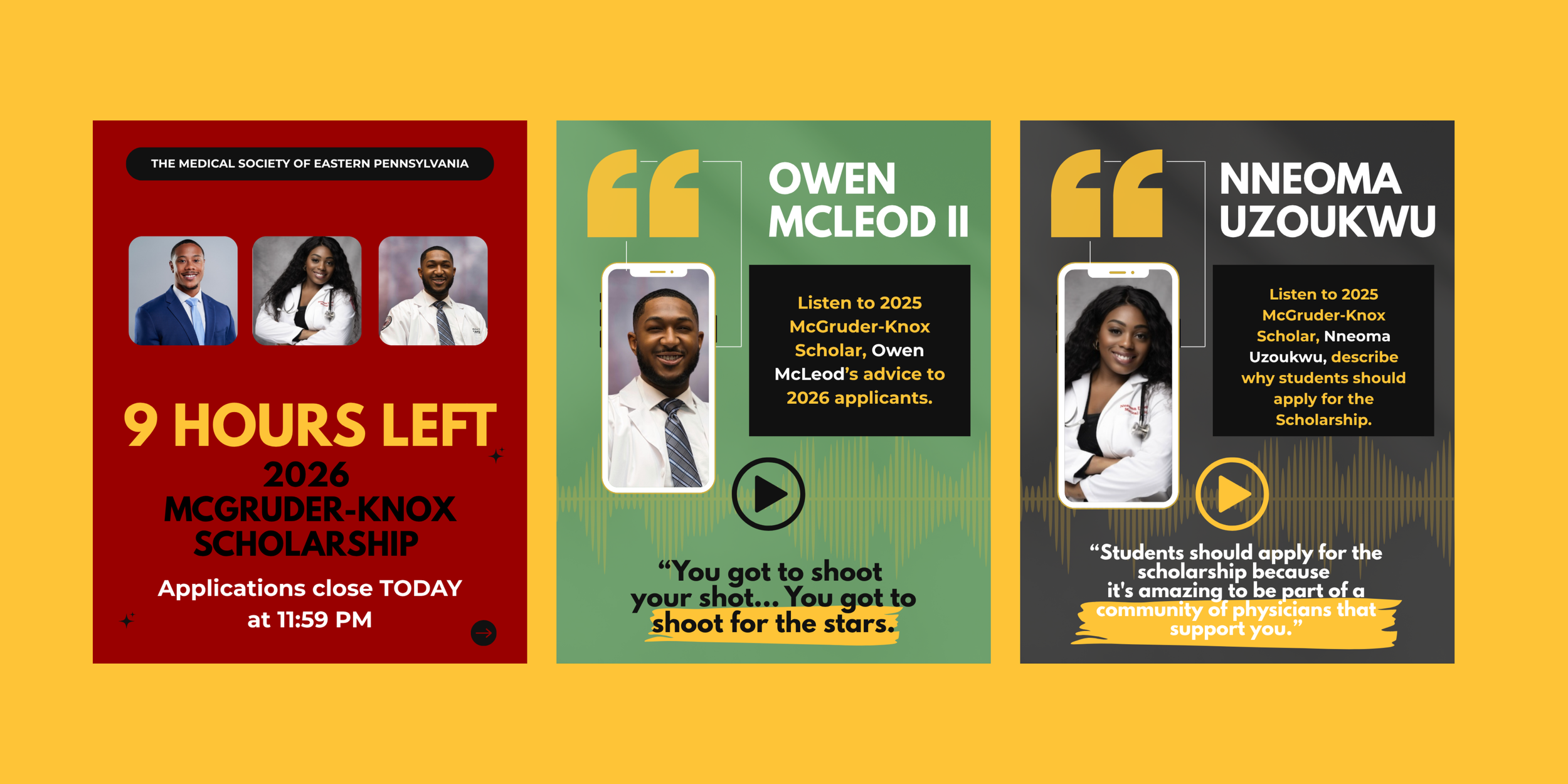
By mid-week, the narrative foundation was established. Day three layered in more direct framing — what the scholarship actually provides and audiogram reflections from three past scholars. These students shared what the scholarship taught them as well as specific advice they have for future applicants. The last slide included a deadline reminder with a direct call to action to apply. This is where the messaging shifted from aspiration to urgency. Because the emotional groundwork had already been laid, the ask felt earned rather than transactional. Email inquiries spiked noticeably in this window.
AUDIOGRAM SLIDES - DAY 3 CAMPAIGN POST
64 completed applications were received by the application deadline
Historical average: ~25 applications
156% increase year over year
Engagement rates for campaign posts approximately 10% higher than baseline posts
2% audience growth during the campaign window
Increased direct email inquiries from prospective applicants
All achieved without paid media. The entire campaign was built on organic reach, sequenced intentionally so that each piece of content did a specific job within the larger narrative arc.
RESULTS
STRATEGIC INSIGHTS
Scholarship and program recruitment challenges are often framed as awareness problems.
In reality, they are frequently narrative clarity problems.
When prospective applicants see themselves reflected in authentic impact stories, application behavior changes dramatically.
By shifting from deadline-based promotion to identity-driven storytelling, the scholarship campaign resulted in measurable application growth within a compressed timeframe.