Sharing, Shearing, See(D)ing, Holding
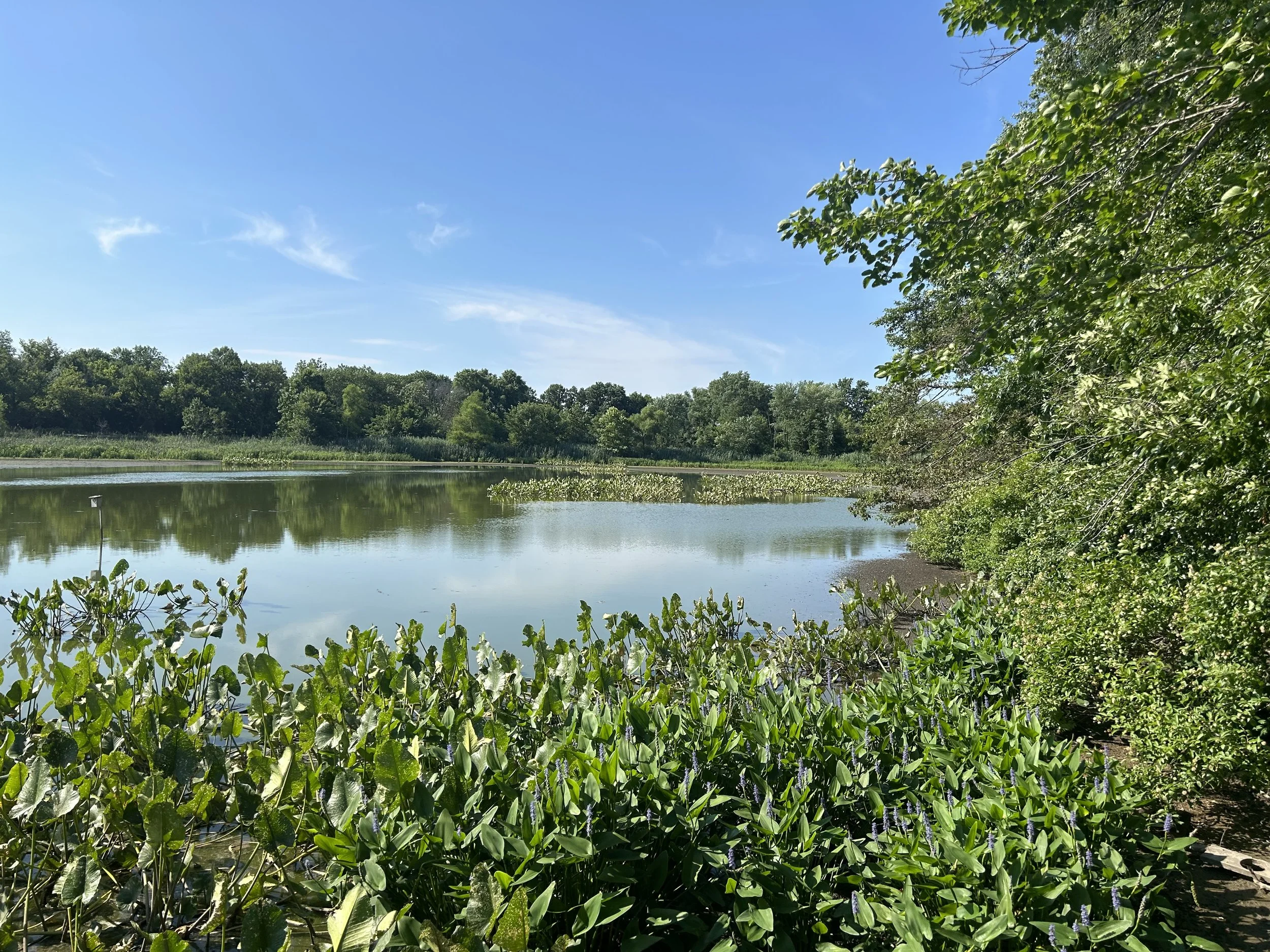
John Heinz National Wildlife Refuge at Tinicum. Philadelphia, PA.
Just tonight I returned from a jazz concert. There was a bassist, an alto sax player, a trumpeter, a pianist, and a drummer. There was also a singer. A Black woman with a voice that traveled slow and sweet like hot molasses but also knew the darkness of sugar – that deep brown knowing that she excavated from somewhere else and brought to the fore, to share in common. As the concert ended, she repeated one refrain for almost fifteen minutes straight, two lines she fluctuated between for the entirety of that song as her voice flew back and forth between that sweet, syrupy stuff and something of a darker hue, heavy and deep:
If I could do it
all over again,
I’d be in
the same skin I’m in.
Beautiful, Black skin.
And as she continued to sing, an environment unfolded within that audience. That mostly Black audience. Across the concert hall, you could hear voices shouting back at her. Cmon! I know that’s right! That part!
As her voice continued to ring through Us and over Us and back into Us, We – The Black audience – knew we had to return to her that which she had painstakenly dug out of that deep place of knowing, the inside place that we also share in common. And in participating in the uniquely African-American practice of call-and-response, we generated a new song, one she couldn’t sing alone and one we would never dare allow her to.
What is intentionally created and then shared in common invites the reciprocal energy of witnessing. And in return, witnessing also generates and builds on what was shared in the first place, allowing the sharer a sense of completion and the witnesser a sense of mutuality and connection.
I don’t think it’s a coincidence that periods of feeling unseen by myself, my friends, or my community also correlate with periods of feeling creatively bloated – like there’s all this stuff inside that’s not finding a way out and an affirming place to land. I’ll give you an example:
Say I have a feeling that I’ve been struggling to articulate or accept. The feeling exists only in my interior environment at this point.
Then, I translate that feeling into a poem that gets written down into a private journal. I call that translation process release, that which starts from an interior place and is then transformed into an external container (i.e. the written poem).
Release feels good. I have somewhere physical to put the feeling down, to offload it from my mind for a while. Release allows for the sacred process of becoming known to myself, my first witness. But only staying in the release stage (which for me typically happens in the form of journaling or creative writing) can still leave me feeling lonely. In the example above, my poem has not been given space to interact with an environment or ecosystem that isn’t my own.
I can feel cut off, like a saw to a branch that wants to be part of a large, expanding tree.
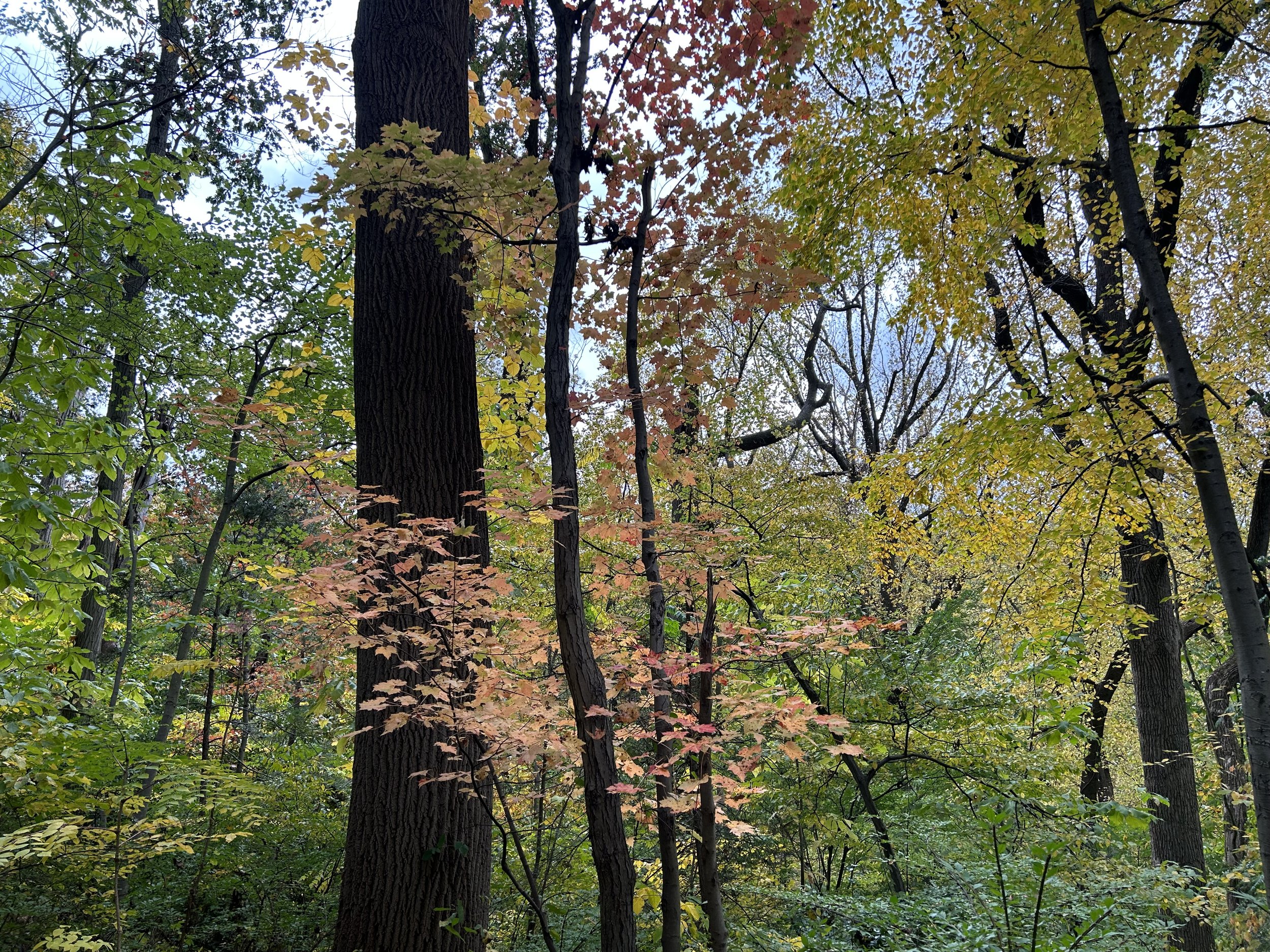
Wissahickon Valley Park. Philadelphia, PA.
Sharing, on the other hand, is the close yet distant cousin of release. Sharing, to me, is the intentional mobilization of that inside thing (think of the singer’s interior affirmation of her Blackness traveling up and out of her body) into something that has the potential to be interacted with, experienced, and/or witnessed on the outside. For instance, sharing the poem might look like posting it on a public blog that exists on the internet (a social environment that is not just your own) where the poem has the potential to be discovered even if you never tell a soul that it’s there.
Sharing is a magical word. It makes things happen. If you look it up today in the Merriam Webster dictionary, you get the following:
To have or use in common with another
Share usually implies that one – as the original holder – grants to another the partial use, enjoyment, or possession of a thing.
And if you follow the word back far enough, you’ll discover a harsher, distant cousin, the Old English word sciern meaning to cut. Sharing, then, is a cutting away of self, in the service of at least one other. It’s a shearing of an inside knowing, feeling, lived experience, truth, or labor that you choose to make common. That which was only mine now belongs to both of us, for our mutual benefit and joy.
Sharing is an antidote to loneliness and an affirmation of life, more and more life. The etymology of the word confirms this. Share is also related to the old high German word scaro, meaning plowshare. A plowshare is the heavy cutting blade at the very bottom of a plow. Its sole purpose is to break up the first few inches of soil so new seeds can be planted. The work of the plowshare is to lift and invert the earth so another hospitable environment can be born.
Like the audience to the jazz singer, we lifted, broke, and flipped her words between the two of us, sustaining her love of self, affirming ours. Our life.